Tree removal in Titirangi
Tree Removal Titirangi
Titirangi is the most technically demanding place we work. Sections are steep, heavily bushed and often reached by a single narrow drive or a flight of steps.
- Free on-site assessment
- Full clean-up included
- 24/7 emergency call-outs
West Auckland
The hardest suburb in Auckland to work in
Titirangi is the most technically demanding place we work. Sections are steep, heavily bushed and often reached by a single narrow drive or a flight of steps. Houses sit under the canopy rather than beside it, and the trees are frequently large natives — kauri, rimu, tōtara, pūriri, nīkau — growing in an environment with real ecological protection over it.
None of that makes tree work impossible, but it does mean nothing here should be quoted from a photograph. We walk the site, work out where material can physically go, check which protections apply to the title, and plan hygiene and rigging before anything is cut.
Local conditions
Kauri dieback is the constraint everything else works around
Where kauri are present on or near a site, hygiene requirements apply and they are not negotiable. Footwear, hand tools and machinery are cleaned before entering and on leaving the root zone, vehicles and foot traffic stay off root zones wherever possible, and soil disturbance is minimised throughout the job.
This is the main thing standing between the remaining kauri and a disease that kills them and has no cure. It spreads in moved soil, which means a pair of boots is a genuine vector. Auckland Council publishes the current requirements and we work to them on every site where kauri are present — so mention it when you first make contact, not when the crew arrives.
Titirangi site realities
- Kauri dieback hygiene is mandatory where kauri are present — cleaning stations and minimal soil disturbance.
- Significant Ecological Area overlays cover much of the suburb; native vegetation removal usually needs consent.
- Very limited access: steep drives and stepped entries mean most material is hand-carried or winched.
- No photo quotes here — sites are assessed in person before any price is given.
In more detail
Inside the Waitākere Ranges Heritage Area
A large part of what makes Titirangi different is a single piece of legislation. Much of the suburb sits within, or immediately against, the Waitākere Ranges Heritage Area, which carries its own protections on top of the ordinary Auckland Unitary Plan rules. Layered over that are Significant Ecological Area overlays covering a great many individual properties.
The practical effect is that the default flips. In most of Auckland, an ordinary garden tree on private urban land can be removed without resource consent, and protection is the exception. In Titirangi, native vegetation removal on a bush section is more likely than not to be controlled — regardless of the tree's size, species or condition — and consent is the starting assumption rather than the unusual case.
That is worth knowing before you get quotes rather than after. Check the address in Auckland Council's GeoMaps and look for SEA and heritage-area overlays, and check your title for any covenants. Where a tree genuinely is dangerous there are provisions for urgent works, but they expect the danger to be real, immediate and documented — photographs and an arborist assessment before the tree comes down, not an explanation afterwards.
What we do here
What Titirangi books
Canopy trees over houses, storm damage and controlled clearing account for nearly all the work here.
Large & Dangerous Tree Removal
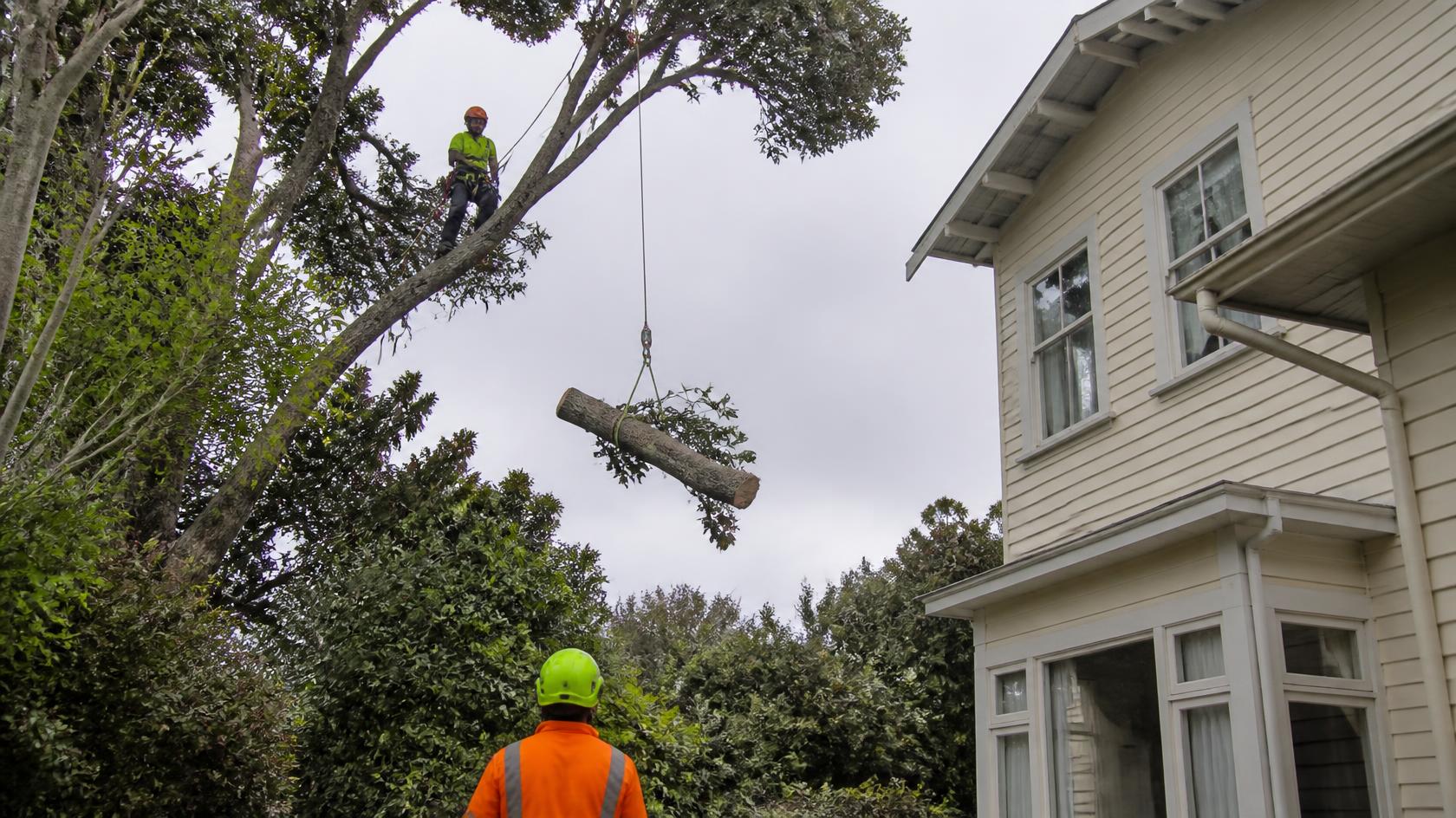
Canopy trees overhanging houses on steep bush sites, where there is no drop zone and the ground falls away.
Large & Dangerous Tree Removal in TitirangiTree Trimming & Pruning
Trimming inside Significant Ecological Areas, kept to the limits of 50 mm branches and 10% of live growth a year, with kauri hygiene wherever kauri grow.
Tree Trimming & Pruning in TitirangiTree Removal
Exotics and self-seeded growth crowding native bush, which is often the work that does not need consent.
Tree Removal in TitirangiBush section in Titirangi?
Tell us if there is kauri anywhere near the job when you first get in touch. It changes how we plan the whole site.
Questions
Titirangi tree questions
Do I need consent to remove a tree in Titirangi?
More often than in most of Auckland, yes. Large parts of Titirangi sit within Significant Ecological Areas and near the Waitākere Ranges Heritage Area, where native vegetation removal is controlled regardless of tree size. Kauri carry additional protection. Check the property in Auckland Council's GeoMaps and expect an arborist report to form part of any consent application.
What kauri dieback precautions do you take?
Boots, hand tools and any machinery are cleaned and disinfected before entering and on leaving a kauri root zone, we keep vehicles and foot traffic off root zones wherever possible, and we minimise soil disturbance. If kauri are on or near your property, mention it when you first make contact so we can plan the job around it.
Can you get a chipper onto a steep Titirangi section?
Often not. Many sites here are worked with hand tools and winches, with material carried or hauled up to a truck at the road. That is slower and it is reflected in the quote — but it is the only realistic way to work a lot of these properties without damaging the site.
Nearby
Around the western fringe
Titirangi connects down through New Lynn and across to Henderson, and our west crews work the whole fringe on one schedule.