
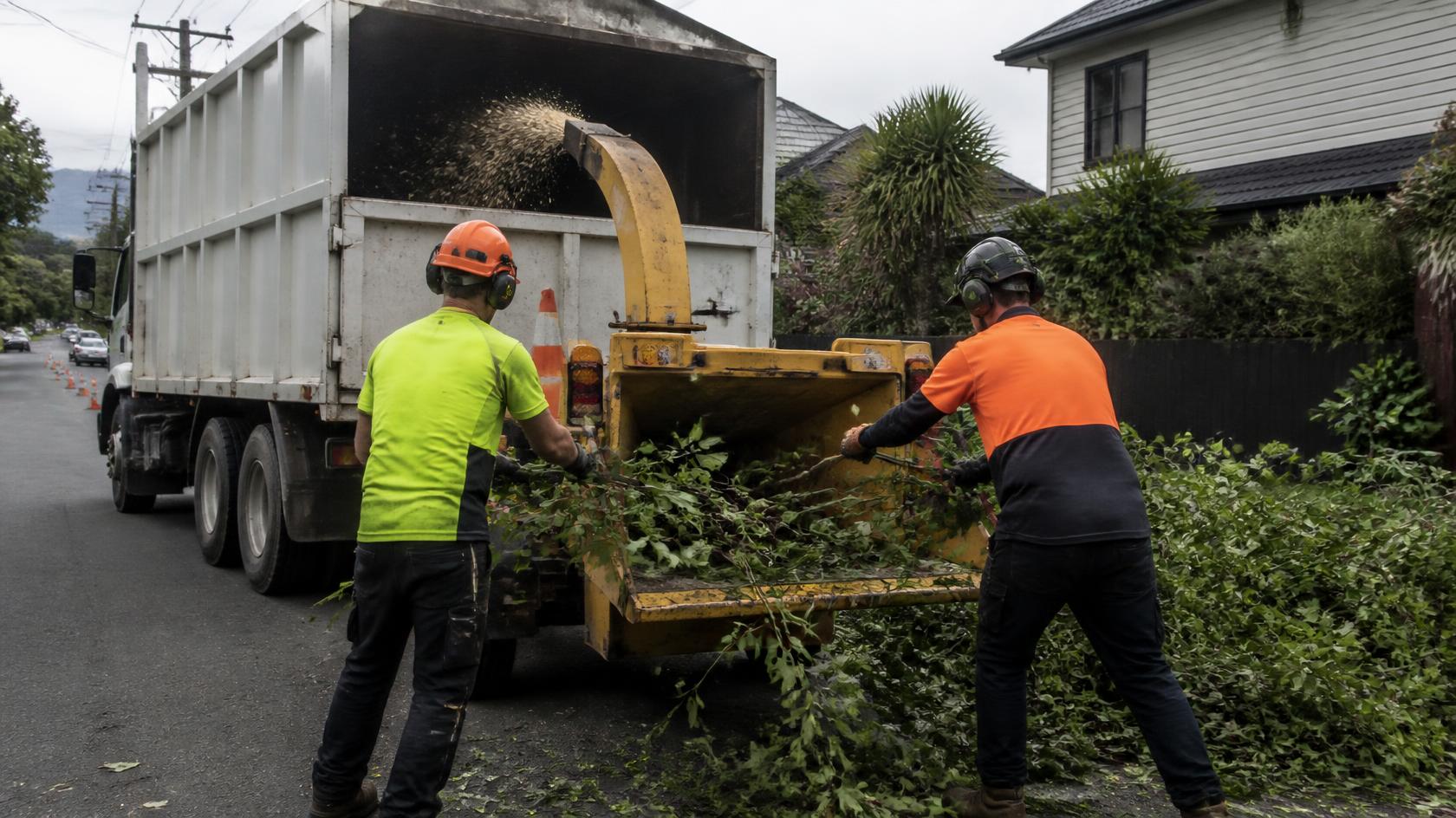
Land & vegetation clearing
Section & Site Clearing Auckland
Subdivisions, new builds, shelterbelts and back sections that have disappeared under thirty years of growth — cleared to a defined end point, with everything carted away.
- Priced as a project, not per tree
- Build-ready stump depths
- Everything removed from site
Scope
“Cleared” means different things — so we define it first
Most disputes about clearing work come down to a scope that was never pinned down. We agree the finished state in writing before anything starts.
| End state | What that includes | Stump treatment |
|---|---|---|
| Survey-ready | Sightlines cleared, undergrowth cut, boundaries visible and walkable | Cut low, left in place |
| Garden reinstatement | Trees and scrub removed, material carted, ground raked and levelled | Ground to 150–300mm |
| Fencing / landscaping | Boundary cleared to the line, root mass removed along the run | Ground to 300–450mm |
| Build platform | Full vegetation removal across the footprint, site left workable for machinery | Full excavation of stumps and structural roots |
| Paddock reinstatement | Shelterbelt or scrub removed, timber processed or windrowed as agreed | Ground or excavated to suit |
Confirm structural requirements with your builder or engineer. Grinding is not sufficient where foundations, driveways or service trenches are going in.
Projects we take on
The five clearing jobs we do most
Pre-build and subdivision clearing
Getting a site from overgrown to workable so surveyors, drillers and excavators can get on with it. Overwhelmingly the most common request in New Lynn, Takanini and Papatoetoe, where deep sections are being split.
Shelterbelt removal and renewal
Over-mature runs of pine, macrocarpa, gum and poplar taken out as a staged project. Standard work around Pukekohe, Papakura and the Albany rural fringe.
Overgrown back sections and gully edges
Decades of self-seeded privet, wattle, tree lucerne and blackberry cleared back to something usable. Common in Massey, Henderson and Glenfield.
Commercial and industrial sites
Car park perimeters, yard boundaries, vacant lots and rights-of-way. Staged so the site keeps operating, and scheduled outside business hours where required.
Pre-sale tidy-ups
Getting a property presentable before it goes to market. Removing an overgrown boundary or an oversized tree often changes how a section reads at an open home more than anything else you can do for the money.
Lifestyle blocks and paddocks
Driveway clearance, paddock reinstatement, fence line preparation and post-storm tidy-ups on rural and semi-rural properties.
Timing
Clear before the diggers, not around them
The single most expensive mistake on a development site is leaving vegetation until the build has started. Once earthworks are underway, access narrows, material gets stockpiled where the chipper needed to sit, and the same clearing job can cost half as much again.
There is a second cost too. Trees left standing through a build routinely get damaged — roots severed by trenching, bark stripped by machinery, root zones compacted under stockpiles — and a tree that was healthy at consent stage becomes a hazard by handover.
If you are keeping trees, tell us. Protecting a root zone properly during construction is cheap; dealing with a failing tree afterwards is not.
Before you start
Clearing is more likely to need consent than a single removal
Removing one garden tree from a suburban section rarely requires consent. Clearing an area of vegetation is a different proposition, and the rules bite more often.
You are considerably more likely to need resource consent where the site sits inside a Significant Ecological Area, contains scheduled notable trees, borders a stream or the coast, sits within the Waitākere Ranges Heritage Area, or where retention of specific vegetation was a condition of an existing resource consent or subdivision approval.
That last one is the most commonly missed. Landscaping and tree retention conditions attached to a subdivision consent bind subsequent owners, and they are not always obvious from the title. It is worth checking your consent conditions before you book anyone.
Where kauri are present — a genuine possibility in Titirangi and Birkenhead — dieback hygiene requirements apply to every person and machine entering the root zone. Tell us at enquiry stage.
Check these first
Why clearing is cheaper per tree
- Mobilisation is the fixed cost. Getting a crew, chipper, truck and grinder to site costs the same whether you remove one tree or twenty.
- Machinery stays put. No repeat set-up, no repeat travel, no repeat traffic management.
- Material handling scales well. A truck that is already on site takes a second load far more efficiently than a second job takes a first.
- One disruption instead of five. Particularly relevant on commercial sites and shared driveways.
- Practical upshot: if you know a whole boundary or run needs doing eventually, quoting it as one project rather than tree by tree will save you real money.
Got a site that needs clearing?
Tell us the address and what the land needs to be ready for. We will walk it, define the finished state in writing, and price it as a project.
Related services
Often part of the same project
Stump Grinding
Grinding for landscaped areas, full excavation where foundations or services are going in.
Stump grindingLarge & Dangerous Trees
Most sites have one tree that needs the careful treatment. We handle it in the same visit.
Complex removalsWhere we work
Site clearing across Auckland
Questions
Section & site clearing FAQs
What does section clearing include?
Typically: removal of trees and large shrubs, cutting and chipping of scrub and undergrowth, stump grinding or excavation where required, and carting all material off site. The end point is agreed in advance — a section cleared for a survey is a different scope from one cleared to a building platform.
Can you clear a section before building work starts?
Yes, and doing it before earthworks is almost always cheaper than working around obstacles later. We can take a site from overgrown to workable so surveyors, drillers and excavators can get on with it. Tell us what the site needs to be ready for and we will scope it to that.
How deep do stumps need to go for a building platform?
Deeper than for lawn. Where foundations, a driveway or a service trench are going in, the stump and main structural roots generally need full excavation rather than grinding. For landscaped areas, grinding to 300–450mm is usually sufficient. Confirm the requirement with your builder or engineer and we will work to it.
Do you clear shelterbelts and rural blocks?
Yes. Shelterbelt removal and renewal is regular work for us in Pukekohe, Papakura, Takanini, Albany and the western fringe. It is priced per run rather than per tree, and because the machinery is already mobilised it is dramatically cheaper than removing the same trees individually.
Do I need consent to clear vegetation on my site?
Sometimes. Clearing is more likely to need consent where the site sits in a Significant Ecological Area, contains scheduled trees, is near a stream or the coast, or where retention of specific trees was a condition of a resource consent or subdivision. Check the property in Auckland Council's GeoMaps before committing to a start date.